
Stephanie Kore is a diagnostic audiologist. Narada Thomas, the CHHA program coordinator. has a one-on-one interview with Stephanie. She shares her experiences as an individual who has had unilateral hearing loss in her right ear since she was young, along with tips on preventing hearing loss.
Narada: Can you share with us your experience as an individual living with hearing loss and how you navigate and access your day-to-day life.
Stephanie: I have hearing loss in one ear, so my experiences may differ from someone with hearing loss in both ears. Overall, I feel like my experiences can be described by small moments and interactions throughout my life. For example, accidentally agreeing to plans, I did not hear correctly, frantically searching my room for my ringing phone because it is difficult to localize the sound or position myself, so the person I am talking with is near my better ear. I appreciate when others face me and speak in a clear yet natural tone of voice. I try my best to repeat back any words or parts of the sentence that I do not hear well, especially in noisy environments, as I know not everyone is always aware of the best way to communicate with someone with hearing loss. I also appreciate it when people make sure they have my attention before talking to me. Sometimes my poorer ear is facing them, and they think I am purposefully ignoring them, which is not the case!
N: In your professional career as a diagnostic audiologist, can you share what you see regarding hearing loss and noise-induced hearing loss?
S: I have had the opportunity to work with all age groups, from babies and young children to young adults and seniors. People need to know that hearing loss can occur at any age. There is a hearing loss called noise-induced hearing loss (NIHL). This hearing loss is caused by exposure to loud noise and is permanent yet preventable. According to the World Health Organization, more than 1 billion young people (12-35 years old) are putting their hearing at risk with loud recreational activities.

N: How are young people putting their hearing at risk?
S: Headphone use is much more common now than in the past, a possible contributing factor to an increase in the risk of hearing loss for young people.
N: What does a normal listening day look like for you?
S: A typical day for me involves working out with my over-the-ear noise-cancelling headphones and listening to Zoom meetings or streaming television shows through my earbuds. This can range from 30 minutes to four hours of the day where I am wearing headphones…and I do not even work from home! The World Health Organization (WHO) reported that 50% of people listening to personal audio devices like phones are putting their hearing at risk and about 1 out of 2 young people are at risk of hearing loss from unsafe listening practices.
It is best to treat exposure to loud sounds like exposure to the sun.
N: Prevention and safe listening practices. What would be your advice?
S: It is best to treat exposure to loud sounds like exposure to the sun. If it is a hot, sunny summer afternoon, you will likely regularly seek shade, wear a hat and apply sunscreen to reduce your exposure to the high UV radiation. The idea is to reduce your exposure to high intensities for long periods of time. Sound can be thought about in the same way! The louder the sound, the shorter the time we have before hearing damage begins.
Noise exposure is also cumulative, which means it adds up over time. By reducing our exposure to loud sound both at work and in our home lives, we can help protect our hearing. The World Health Organization’s Tips for Safe Listening report recommends keeping the volume down, protecting our ears from loud sounds, limiting time spent in noisy activities, and monitoring our listening levels on our devices.
 For example, I noticed that I was increasing the volume on my phone to more than 50% of the volume bar when I was wearing earbuds on the bus. Now, I either wear my noise-cancelling headphones so I do not need to increase the volume as much or I do not wear my headphones on the bus. If I notice I have been wearing headphones for several hours, I try to make an effort to take breaks and use my computer speaker for Zoom meetings or an external speaker to listen to music at home.
For work, we can wear hearing protection whenever we are in noisy environments, even for short periods of time.
If we go out dancing at a nightclub or to a concert, we can wear earplugs and try to stay away from the speakers. There are also musician’s earplugs that allow music and speech to be heard while protecting our ears from harmfully loud sounds.
When we are using headphones, we can try to keep the volume on our device at 50% or below (i.e. stay within the first half of the volume bar). If more volume is needed, try noise-cancelling headphones or reduce loud noise in the environment to keep the volume in a safe range.
Tip: If it is difficult to monitor device volume, volume limits can be turned on in device settings so there is no accidental blast of loud sound. In addition, some phones have built-in volume monitoring that tells you when your listening levels are too loud.
N: What are the types of hearing loss? Can you share how the use of hearing aids or cochlear implants individuals can benefit when it comes to managing their hearing loss?
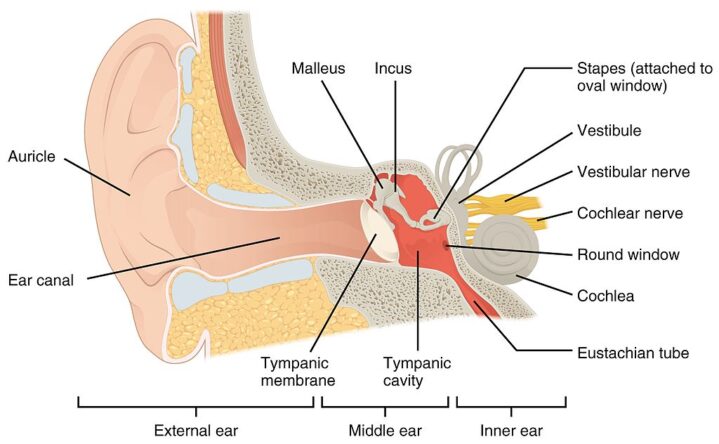
The auditory system consists of the external ear, middle ear, inner ear and auditory brain. If there is damage to the external or middle ear but the inner ear is intact, this typically results in conductive hearing loss, which may be improved with medical treatment. If there is damage to the inner ear, this can result in sensorineural hearing loss, which is usually permanent. Noise-induced hearing loss is a type of sensorineural hearing loss that is permanent. This is why it is so important to take steps to prevent it! If there is damage to the external/middle and inner ear, this can result in mixed hearing loss. Central hearing loss occurs with damage beyond the inner ear in the auditory nerve and/or brain.
There are also different degrees of hearing loss like mild, moderate, moderately-severe, severe, and profound. Generally, hearing aids are a good first step for someone with noticeable hearing loss and cochlear implants are used for more severe degrees of hearing loss where hearing aids may not work as well. It is best to consult with your audiologist, ear-nose-and-throat physician, family doctor, and/or hearing instrument provider to discuss the best treatment options for you.
N: If someone feels they are losing their hearing or hearing loss is getting worse, what should they do?
S: If you experience a sudden hearing loss, it is important to seek help immediately as this is considered a medical emergency that requires timely treatment. For all other concerns about hearing loss, there is a range of options from visiting an audiologist for a hearing test to discussing these concerns with your doctor.
If you would like to learn more about preventing hearing loss, check out the resources below:
- Protect Your Hearing: What Noise Does to Your Ears: https://www.youtube.com/watch?v=G2ZfG8CIuWE
- World Health Organization:https://www.who.int/activities/making-listening-safe
- Preventing Hearing Loss – WorkSafeBC: https://www.worksafebc.com/en/resources/health-safety/information-sheets/listen-up-how-to-prevent-hearing-loss?lang=en
How to ensure you are providing accessible communication:
- Don’t shout and make sure to face the individual
- Avoid covering the mouth. Wear accessible clear lens masks.
- Make sure to provide captioning available in all virtual meetings, videos both for training and on social media posts.
- Find quiet environments when possible reducing noisy areas making it very challenging with all the background noise.